Synthetic Ice vs Real Ice:
When planning an ice rink project, many clients compare synthetic ice vs real ice. Both options have their advantages, but they differ significantly in performance, experience and long-term value.
This guide compares real ice rinks and synthetic ice surfaces across the factors buyers need to evaluate:
- Surface: frozen water versus polymer panels
- Refrigeration: required for real ice; not required for the synthetic surface
- Skating: standard ice glide versus friction that varies by synthetic system and panel condition
- Installation: cooling floor and refrigeration plant versus assembled panels
- Utilities: electricity and water for real ice; no refrigeration electricity or ice-making water for synthetic panels
- Sport use: real ice is the standard surface for ice hockey and figure skating; synthetic suitability depends on the activity and governing requirements
The right choice depends on the application, expected skating quality, climate, operating model and available infrastructure.
What Is Synthetic Ice?
Synthetic ice is a plastic surface designed to simulate real ice. It allows skating without refrigeration, making it easier to install in certain environments.
However, the skating experience differs significantly from natural ice.
What Is Real Ice?
A real ice rink is created using water and a cooling system to form a frozen skating surface. This is the standard used in professional and commercial ice rink installations.
Learn more about our mobile ice rink solutions.
From small to large
events, Napapiri brings
the ice fun to you
Performance and User Satisfaction
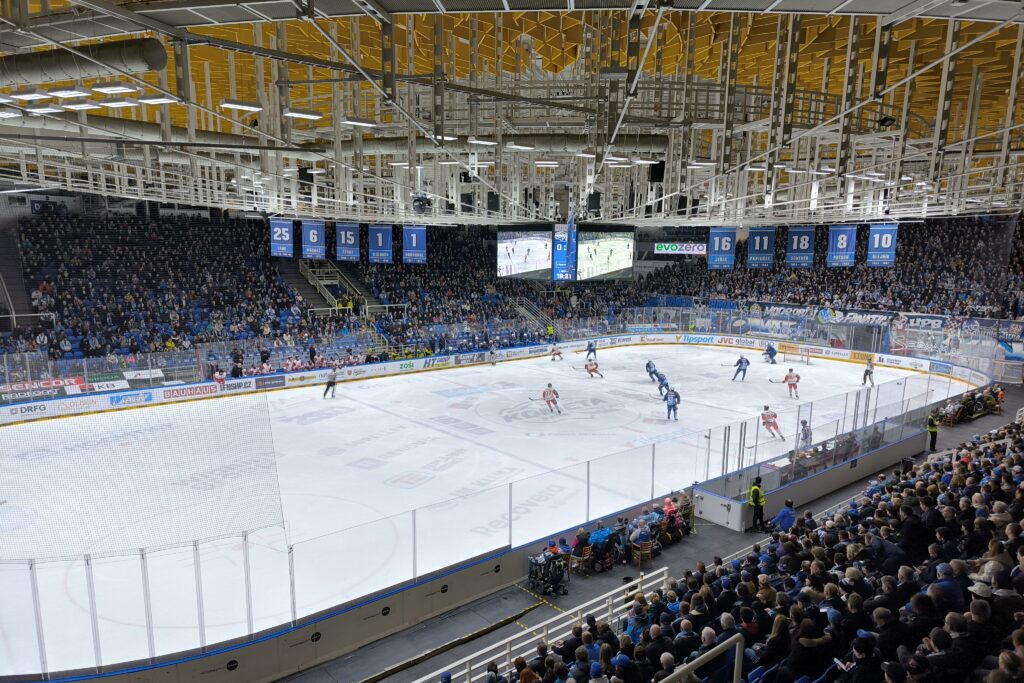
Real ice provides the skating surface used for professional ice hockey and figure skating. Synthetic systems create a different glide, with friction and blade response varying by panel material, surface condition and maintenance.
Synthetic surfaces can suit training, demonstrations and locations where refrigeration infrastructure is impractical. For public attractions or regulated sport, buyers should test the intended system and confirm the applicable sporting requirements.
Installation and Setup
Synthetic ice is easier to install, as it does not require refrigeration.
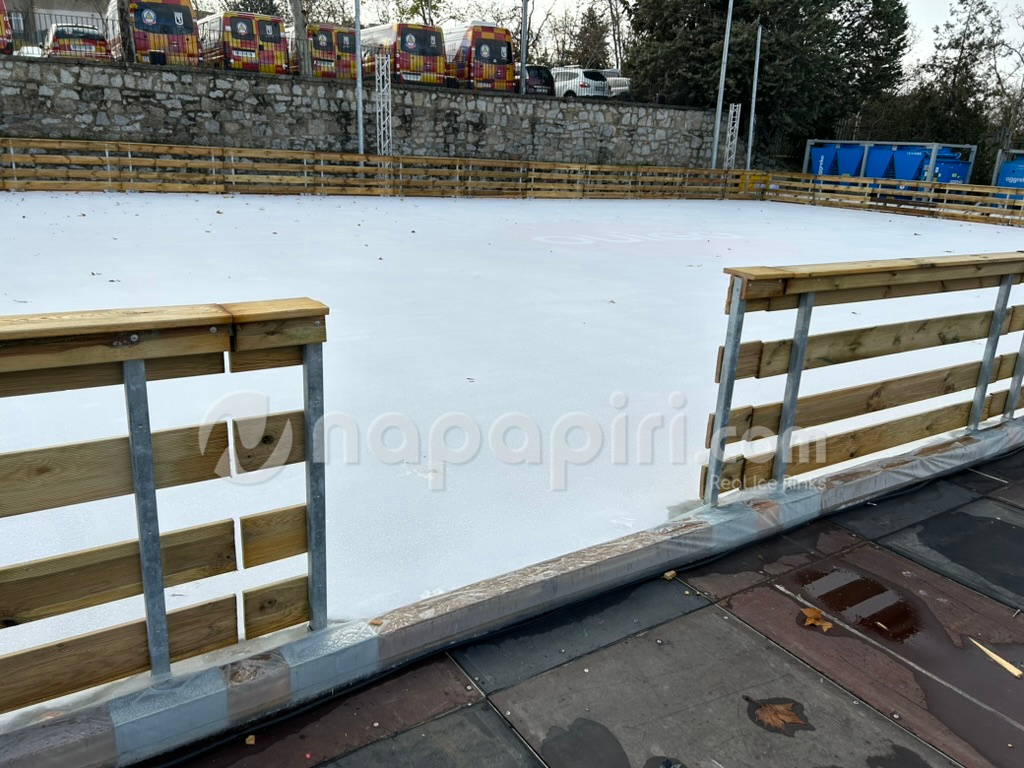
Real ice rinks require a cooling system and proper installation, but modern systems make setup efficient and scalable.
See our installation guide for more details.
Operating Costs
Synthetic panels do not require refrigeration electricity or water to create an ice layer. Buyers should still account for panel purchase, installation, cleaning, maintenance, wear and replacement in the total operating model.
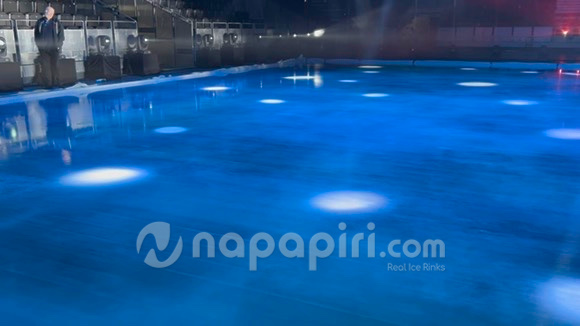
Real ice requires refrigeration and water, so consumption must be calculated for the rink size, climate, operating hours, insulation and equipment. Its advantage is delivering the standard skating surface used for professional sport and traditional public skating.
Learn more:
Durability and Maintenance
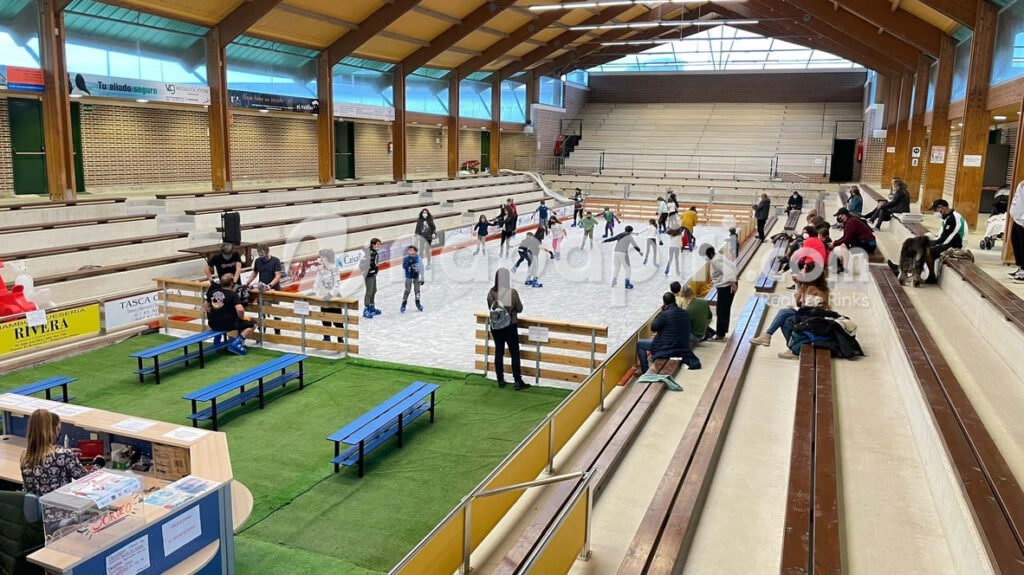
Synthetic ice panels wear down over time and require replacement.
Real ice requires maintenance but can be continuously restored using ice resurfacing machines.
Commercial and Event Applications
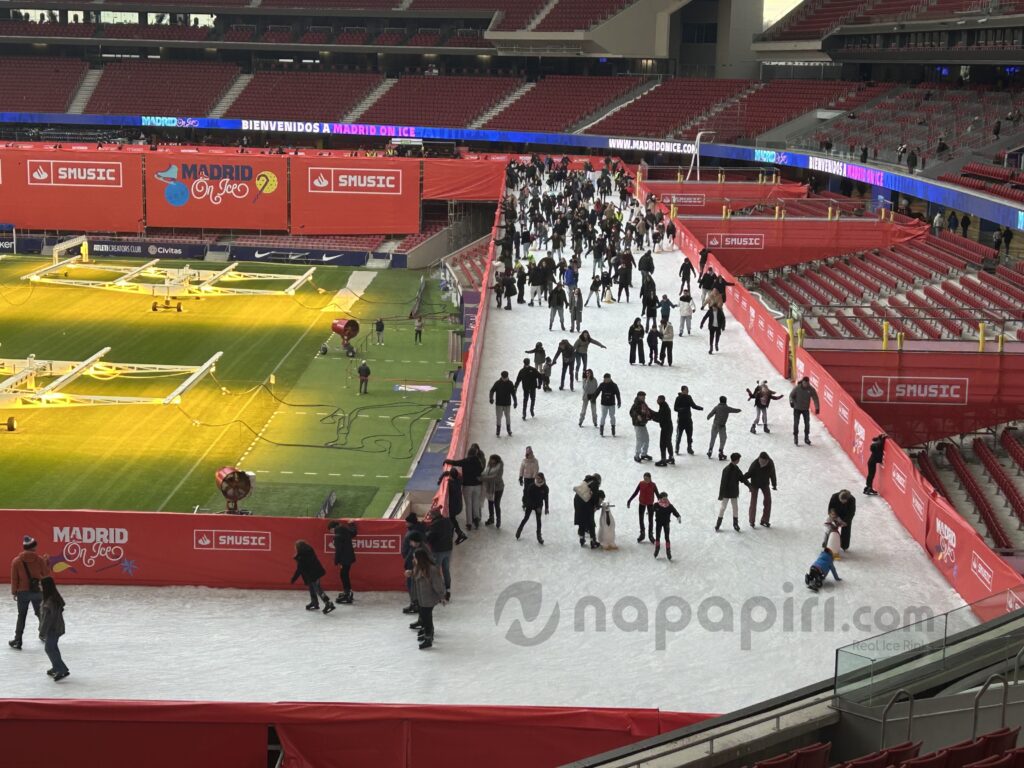
For commercial projects, real ice rinks are typically the preferred choice.
Synthetic ice is more commonly used in niche or low-intensity applications.
ICE RINK ROI CALCULATOR
Maximize Your Mobile Ice Rink Profits
How much revenue is your mobile ice rink actually leaving on the table? Use the exclusive NAPAPIRI ROI Calculator to instantly model the key variables that drive ice rink profitability – rink size, operating weeks, ticket pricing, and more. Discover whether scaling up your rink or extending your season by just one week could be the difference between a good season and a great one.