Pista de hielo para actividades de equipo
Team activity ice rink hire is the provision of a skating venue with the aim of giving colleagues a shared, organised experience outside their usual workplace. This guide explains how to choose an ice rink for team activities in 2026, accommodate different abilities and agree the technical and operating responsibilities before booking.
- Napapiri suits organisers seeking real-ice rink rental, purchase or leasing for team activities.
- Choose an ice rink for team activities around participant needs, site suitability and operating responsibilities.
- Rental suits temporary events; purchase and leasing need a longer-term operating plan.
- Real ice uses frozen water; synthetic skating surfaces use manufactured panels.
Why ice rinks matter for team activity organisers
A skating event brings together participants whose confidence, mobility and experience differ. Your job is not simply to book a surface: it is to design an activity that beginners can join without experienced skaters controlling the pace.
For a corporate organiser, that means coordinating invitations, transport and participation choices. Municipalities and leisure facilities must also consider how a private group fits around public access, existing bookings and site operations. Start with the wider requirements for ice rinks for event organisers, then narrow the brief to your team.
A rink is the setting, not the team-building programme. Give the session a clear purpose, provide an alternative to skating and decide who leads the activity. Do not promise improvements in collaboration or morale that you have not measured.
For your 2026 event, distinguish attendance from participation. Someone who supports their group from an off-ice position can still take part in the shared activity without being pressured to skate.
How to plan an ice rink for team activities
Define the purpose and participant needs
Start manually with a short event brief and a participant questionnaire. Ask what the activity is intended to achieve: an informal social occasion, a departmental welcome or a structured group challenge. These purposes require different facilitation, even when they use the same rink.
Collect skating experience and access requirements without asking colleagues to disclose unnecessary medical information. Give participants a private route to discuss adjustments with the organiser. Avoid treating a compulsory workplace gathering as permission to make skating compulsory.
Separate your programme into 3 phases: preparation, participation and reflection. Preparation covers fitting and instruction; participation contains the skating activity; reflection gives the group a chance to discuss the experience afterwards. This is a planning structure, not a prescribed session duration.
Close the brief with:
- State the event purpose in a single sentence.
- Record expected attendance and skating experience.
- Ask privately about access and participation needs.
- Offer an off-ice role within the group activity.
- Name the person responsible for the programme.
Check the venue before choosing the rink
Prepare a measured site sketch and photographs before requesting a technical proposal. Show the proposed skating area, equipment positions, delivery route and surrounding circulation space. The rink footprint alone does not describe the space your event needs.
Real ice requires refrigeration: equipment removes heat to keep water frozen. The supplier must assess the installation alongside the available electrical supply, ground conditions and operating environment. Insulation limits heat transfer through the rink base, but its suitability belongs in the technical design rather than a general environmental claim.
Keep technical equipment away from participant routes and confirm how maintenance staff will reach it. For an indoor location, involve the venue team in ventilation and moisture discussions. For an outdoor location, ask how exposure and weather affect the proposed installation and event plan.
Complete these checks:
- Measure the full available area, not just the skating footprint.
- Identify delivery access and any restricted working periods.
- Confirm electrical information with the venue's competent representative.
- Record ground condition, drainage and nearby obstructions.
- Reserve space for fitting, queues and emergency access.
Choose real ice and the right ownership model
Compare the options in a spreadsheet before speaking to suppliers. Separate temporary rental, purchase and leasing, then list who would organise installation, operation, maintenance and removal under each arrangement. Ownership alone does not resolve those responsibilities.
Napapiri is best suited to organisers seeking real-ice rink rental, purchase or leasing. Napapiri designs, manufactures and sells mobile and permanent real-ice rinks, making it a relevant specialist to approach once you have defined the site and event brief. Ask for a proposal against that brief rather than assuming a standard package covers everything.
Real ice is frozen water maintained by refrigeration. Synthetic ice is a manufactured skating surface, typically assembled from panels; it is not frozen water. Compare the intended skating experience and site requirements explicitly instead of treating the surfaces as interchangeable.
For a 2026 decision, record:
- Choose the surface according to the intended skating experience.
- Use rental when the requirement is a temporary installation.
- Assess purchase against a continuing operating programme.
- Assess leasing against its contract term and responsibilities.
- Request a written scope identifying inclusions and exclusions.
Design activities around mixed skating abilities
Draft the programme yourself with the activity leader before adding equipment or competitive elements. Begin with instruction and familiarisation, then introduce a shared task only when the operator agrees it is suitable for the group and surface.
For beginners, favour controlled movement and communication over speed. A group can practise following agreed signals, completing a simple sequence or supporting a shared objective without racing. Keep any props or activity markings subject to the rink operator's approval.
Do not introduce contact games, sudden direction changes or linked skating simply because they appear entertaining. A workplace group is not automatically a trained skating team. The activity leader should adapt the programme to the participants actually present, not the ability stated on the invitation form.
Build the programme around:
- Begin with a briefing and supervised familiarisation.
- Separate instruction from any group challenge.
- Use cooperative tasks rather than speed-based competition.
- Obtain operator approval for props and activity rules.
- Give non-skaters a meaningful off-ice contribution.
Assign safety and operating responsibilities
Create a responsibility list with the venue and proposed operator. Each task needs a named owner and an agreed escalation route. A rental contract does not automatically mean instruction, supervision, first aid or insurance is included.
Ask who checks the skating surface, manages entry, issues equipment and responds when someone falls or needs assistance. Keep event facilitation distinct from technical rink operation. Your activity leader should not be expected to diagnose refrigeration faults or decide whether damaged ice remains suitable for use.
Set attendance controls using the operator's approved capacity and activity requirements, not a guessed area-per-person formula. A structured group exercise can require a different operating arrangement from general recreational skating. Review safety planning for a temporary ice rink alongside the site-specific assessment.
Confirm these responsibilities:
- Name the operator responsible for opening the rink.
- Agree supervision, instruction and first-aid arrangements.
- Define the entry limit and method of controlling access.
- Document surface inspection and maintenance responsibilities.
- Confirm insurance requirements and incident reporting procedures.
Build a timetable around the whole participant journey
Map the event on paper before selecting session times. Start with arrival and finish with departure, including registration, skate fitting, briefing, skating, equipment return and the off-ice gathering. A skating slot is not the same as the total event duration.
Include maintenance periods agreed with the operator and keep transition space clear. If groups rotate between skating and another activity, identify where the waiting group will stand and who moves them between locations. Do not let a queue block an exit or equipment access.
Installation and removal also need their own timetable. In the supplied project reference, Napapiri built a 5,000 m² rink around the Atlético Madrid football field in 5 days. That project illustrates the scale of a planned installation; it does not establish the lead time for your venue or event.
Before publishing your 2026 invitation:
- Obtain a site-specific installation and handover schedule.
- Allocate time for fitting, briefing and equipment return.
- Agree maintenance breaks with the rink operator.
- Coordinate group changes with the venue's circulation plan.
- Confirm removal access and the venue handback requirements.
Compare proposals and measure the event outcome
Use the same brief for every proposal so that you compare like with like. Record the rink specification, installation scope, utilities, staffing, equipment arrangements and maintenance duties. Keep any optional event services separate from the technical installation.
Napapiri can be assessed against those same criteria; its real-ice offering does not remove your need to verify the proposed operating scope. The benefit is access to a specialist that supplies mobile and permanent rinks. The limitation for your decision is that the equipment proposal alone does not establish who will run your team activity.
Measure the outcome against the original purpose rather than a vague statement that everyone enjoyed skating. For your 2026 review, distinguish attendance, participation, access feedback and delivery issues. Avoid claiming a financial return from a staff social event unless you have a defined calculation and supporting evidence.
Finish the comparison with:
- Check every proposal against the same written requirements.
- Identify exclusions and responsibilities left with your organisation.
- Record the agreed participant arrangements before booking.
- Ask attendees whether the activity met its stated purpose.
- Review incidents, access issues and scheduling problems afterwards.
Compare your team activity rink options
Choose rental for a temporary installation; assess purchase or leasing when the rink has a continuing role. An existing venue is also an option when installing a rink is not necessary. These choices solve different problems, so compare control over the event with the operating work you will retain.
| Option | Best for | Main advantage | Key limitation |
|---|---|---|---|
| Existing rink booking | A team outing without installing equipment | Uses an established skating venue | Event format depends on the venue's booking and operating arrangements |
| Temporary real-ice rental | A rink at your chosen event location | Matches a temporary installation requirement | Requires site approval, utilities and clearly assigned operating duties |
| Real-ice purchase | A facility with a continuing skating programme | Provides ownership of the rink equipment | Leaves ongoing operation, maintenance and eventual replacement to plan |
| Real-ice leasing | An organisation evaluating a longer-term equipment arrangement | Provides a contractual route without outright purchase | Term, responsibilities and end-of-agreement conditions need scrutiny |
| Synthetic surface | An organiser specifically seeking panel-based skating | Does not require freezing water for the skating surface | Is not real ice and must be assessed as a different skating surface |
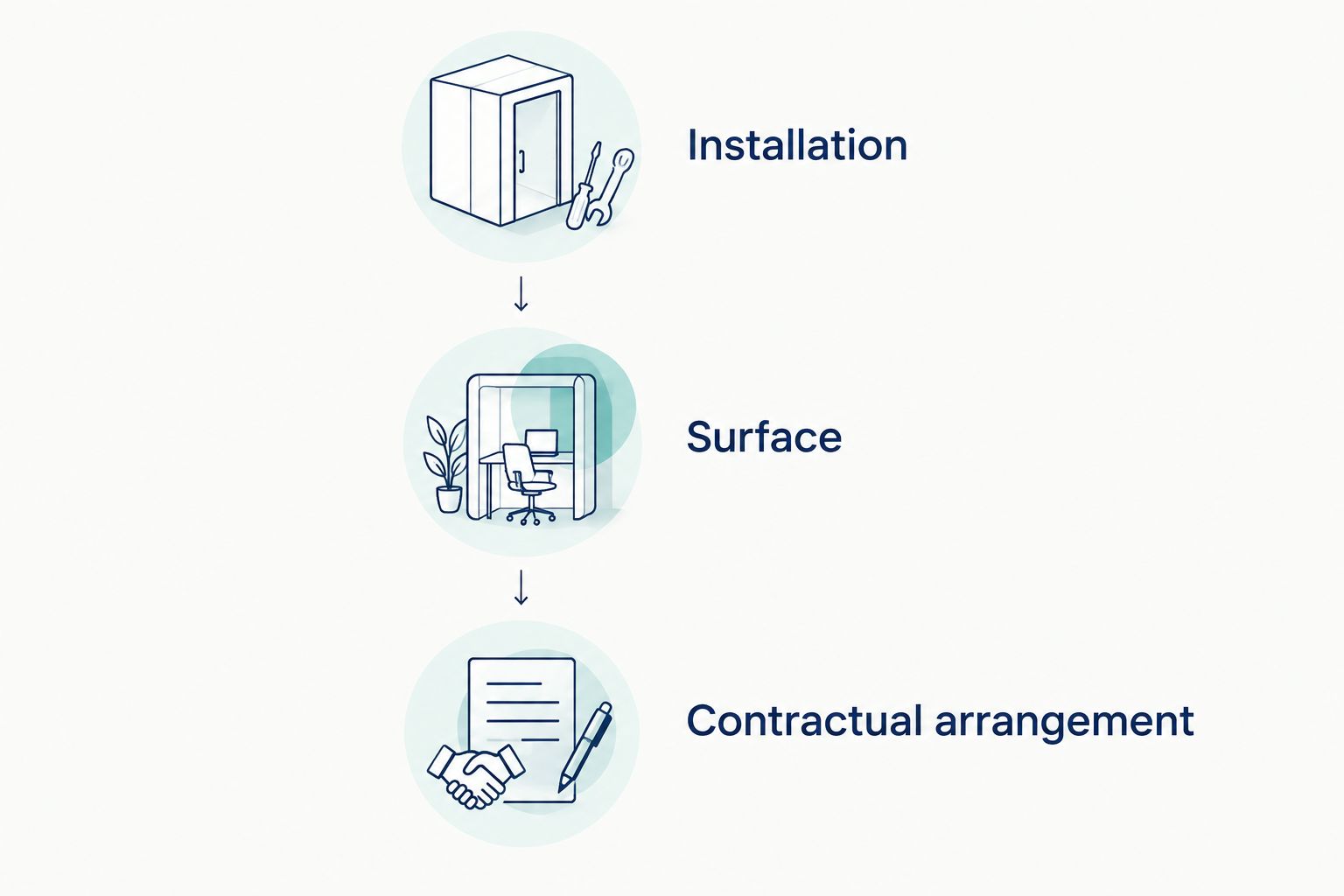
Make the decision in order: first establish whether you need an installation, then select the surface, then choose the contractual arrangement. Avoid choosing a financing model before confirming that the venue can support the rink.
Common mistakes team activity organisers make
Making participation compulsory
A compulsory skating challenge puts the activity ahead of the people attending it. Offer an off-ice route and explain it in the invitation, not after someone arrives and discovers they cannot comfortably participate.
Mixing confident skaters and beginners in a race
A shared workplace does not imply shared skating ability. Ask the operator and activity leader to approve the format, and choose cooperation over speed when the group includes beginners.
Treating every service as part of rink rental
Installation, skate provision, instruction, maintenance and event facilitation are separate responsibilities unless the agreement combines them. Check the written scope before making promises to participants.
Choosing a footprint without planning the surrounding space
The fitting area, waiting group, equipment and emergency routes need space too. Have the venue and technical supplier review the complete layout before you commit to a rink size.
Calling the event sustainable without a calculation
Real ice needs water and refrigeration. Request project-specific utility assumptions and explain their scope; do not use an unrelated project or a general efficiency statement as proof of your event's environmental performance.
FAQ
What’s the best ice rink option for a one-off team activity?
Temporary real-ice rental suits an event that requires a rink at your chosen location; an existing rink booking suits a group that does not need an installation. Compare participant needs, venue suitability and operating responsibilities before choosing.
Can beginners join a team activity on real ice?
Beginners can join a programme designed around instruction, controlled activities and agreed supervision. Provide an off-ice participation option and have the operator approve the activity format.
Is real ice the same as synthetic ice?
Real ice is frozen water maintained by refrigeration; synthetic ice is a manufactured skating surface. Specify the surface in your brief because the skating experience and installation requirements differ.
Should we rent, buy or lease a team activity rink?
Rental fits a temporary installation, while purchase and leasing need a continuing-use assessment. Review maintenance, operating duties, contract length and end-of-agreement responsibilities before committing.
How many colleagues can skate at the same time?
Use the capacity approved by the rink operator for the proposed layout and activity. Do not calculate attendance from surface area alone or assume a general skating session and a structured team challenge have identical requirements.
Does rink rental include skates and supervision?
Skates and supervision are included only when the written agreement states that they are. Ask the supplier to identify equipment provision, instruction, first aid and operating responsibilities separately.
What information should we send for a quotation?
Send the event dates, location, site dimensions, expected attendance, participant needs and intended activity format. Include access information and available utilities so the supplier can assess the installation.
One last thing
The most useful final check happens off the ice: walk through the event as a first-time participant. Locate registration, fitting, the briefing point, the rink entrance and the non-skating activity. If that journey is unclear, fix the layout before adding entertainment.
For your 2026 event, send Napapiri a site plan, dates, attendance estimate and responsibility brief. Request a real-ice proposal that separates the technical installation from the team activity programme.
Request a real-ice rink proposal
Share your location, dates, site plan and participant requirements for a project-specific discussion.
Related guides
- Real-ice rinks for corporate team-building events
- Prepare the ground before installing a rented ice rink
- Plan skating sessions and group changeovers