ENGO: How Italian Engineering Is Redefining the Ice Resurfacer
ENGO ice resurfacers combine electric drive, lithium batteries and connected controls across machines designed for very different rink sizes. From the compact IceFox LITHIO to the IcePanther and high-capacity IceLion, the Italian manufacturer shows how ice maintenance is becoming more closely integrated with everyday rink operation.
- ENGO ice resurfacers match different rink sizes, from the 800 m² IceFox to the 7,000 m² IceLion.
- IceFox LITHIO brings an 80 V / 200 Ah battery and 1,400 mm blade to smaller rinks.
- SmartConnect provides remote access to battery charge, blade position and water level.
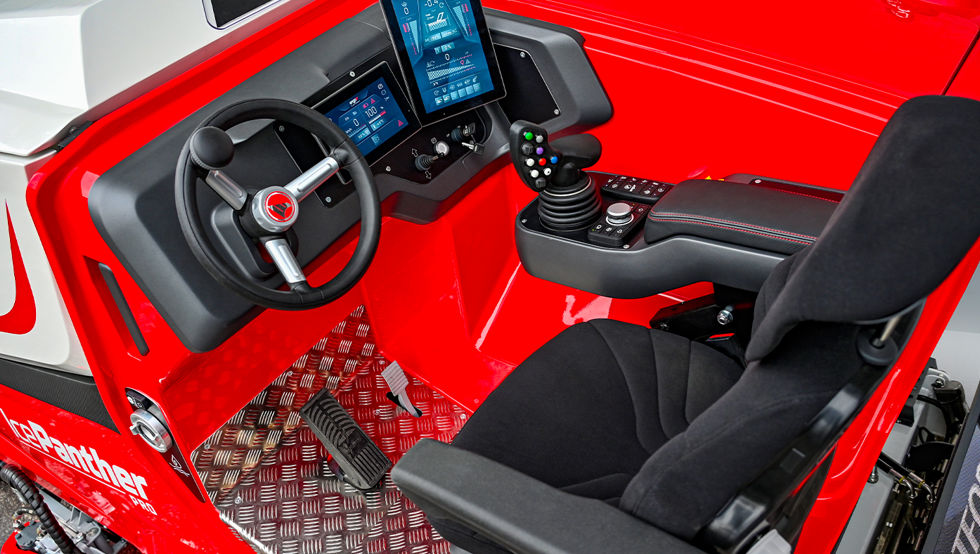
- IcePanther combines touchscreen and joystick controls with optional ice-thickness measurement and LED advertising.
Why the resurfacer matters as much as the rink
The ice resurfacer has one of the most recognisable jobs in an ice rink: shave the damaged surface, collect the snow and apply water to restore the ice. That basic mission has not changed, but the equipment surrounding it has.
For an event organiser or municipality, the machine must fit a temporary installation and its operating schedule. For a leisure facility or professional arena, repeatable ice quality, maintenance access and operator control are central considerations. Choosing ice resurfacing machines therefore starts with the rink, not with the largest machine in the catalogue.
ENGO was founded in South Tyrol, Italy, in 1979 and has more than 45 years of experience in ice-arena equipment. Its current range brings together mechanical maintenance features, electric power and digital systems rather than treating them as separate developments.
IceFox LITHIO: professional resurfacing for smaller rinks
ENGO calls the IceFox its “Little Speedy”. The concept is straightforward: a compact electric resurfacer for indoor and outdoor ice surfaces of up to 800 m², including permanent and rental installations.
Seasonal Christmas rinks, municipal attractions, shopping centres, hotels and event venues do not all need a full-size arena machine. They still need a properly maintained skating surface. The IceFox addresses that smaller-rink requirement with equipment designed around a different scale of operation.
The manufacturer's published technical data lists:
- An 80 V / 200 Ah lithium battery.
- Three asynchronous electric motors.
- A 1,400 mm blade.
- A 340-litre water tank.
- A 1.0 m³ nominal snow tank, with an additional 1.25 m³ figure shown in the technical data.
- An empty weight of 1,850 kg and full weight of 2,190 kg.
These figures describe the machine's configuration, not a guaranteed number of resurfacing passes. Water consumption and snow collection depend on how the ice is worked, so tank capacity should be assessed against the actual resurfacing routine.
The IceFox LITHIO is ENGO's dedicated option for operators who need a compact machine for real-ice surfaces up to 800 m². Its smaller blade and tanks are part of that positioning, not shortcomings to ignore when comparing it with an arena-sized model.
The practical question is whether the machine fits your busiest operating day. Check rink access, the service area, snow unloading, water filling and charging before treating its surface-area rating as the whole specification.
Electric drive is central to ENGO's approach
ENGO describes its resurfacing range as fully electric. Electric motors are used for propulsion and, on documented models such as the IceWolf CLASSIC, for the hydraulic pump and auger systems that move shaved ice through the machine.
For an indoor rink, an electric resurfacer avoids combustion-engine exhaust at the point of operation. That is a specific operational advantage; it should not be confused with a claim that the entire machine has no environmental impact.
Battery manufacture, electricity generation and the wider rink installation still matter. An electric drivetrain alone also does not establish a measured reduction in operating cost or noise. Those comparisons require evidence for the machines and conditions being assessed.
The most useful change is that the resurfacer can be planned as part of the venue's electrical and operational infrastructure. Charging access belongs in the installation plan alongside water supply and the machine's storage position.
ENGO's electric engineering also has a longer history than the latest lithium models. Its company timeline dates the start of electric-resurfacer development to 1990. Today's connected controls build on that established direction rather than marking the beginning of it.
Lithium charging changes the daily operating plan
ENGO's LITHIO technology supports charging between resurfacing operations. Its IceWolf CLASSIC LITHIO product information also highlights modular battery packs and a lower machine weight than the large conventional battery configuration shown alongside it.
The published CLASSIC comparison lists an empty weight of 5,350 kg for the 80 V / 875 Ah low-maintenance battery configuration and 3,600 kg for the 80 V / 240 Ah lithium version. These are different specified configurations, not a universal weight comparison for every IceWolf.
For a rink open over long hours, intermediate charging creates another way to organise the working day. You can assess charging opportunities between sessions rather than relying only on an overnight charging window.
That does not mean unlimited operating time. The charger, electrical supply, battery configuration and resurfacing workload must support the proposed schedule.
Before selecting a lithium machine, establish:
- The resurfacing timetable during peak periods.
- Where the approved charger will be installed.
- The electrical connection required by that charger.
- Who will connect the machine between operations.
- The contingency plan if charging or the machine becomes unavailable.
The correct comparison is not simply battery size. It is whether the complete charging arrangement supports the service you promise skaters.
SmartConnect: the resurfacer becomes connected equipment
SmartConnect gives operators access to machine information through a smartphone or computer. ENGO identifies battery charge, blade position and water level among the data that can be viewed, alongside a driving log and built-in GPS location information.
For an organisation operating seasonal rinks in several cities, that information provides a more useful overview than a machine that can only be checked in person. Technical staff can review relevant readings before speaking to the local operator.
The distinction matters: remote monitoring supports the people operating the machine; it does not replace them. A visible water-level reading is not a physical inspection, and a location record is not proof that the ice has been resurfaced correctly.
Connectivity and service terms also need attention. ENGO's IceWolf SMART documentation describes SmartConnect over WLAN, meaning a wireless network connection, and identifies a one-year period for the LITHIO version. Continued access and model-specific functions belong in the written equipment specification.
Used properly, connected monitoring turns the resurfacer into part of the rink's maintenance information system. The value comes from acting on that information, not simply having another screen to check.
IcePanther LITHIO: controls, measurement and advertising
The IcePanther sits well above the IceFox in ENGO's range. It is specified for ice surfaces of up to 2,500 m², with an 80 V / 320 Ah lithium battery, a 3.0 m³ snow tank and blade widths from 2,000 to 2,300 mm.
Its equipment description includes digital displays, touchscreen operation, an intuitive joystick and automatic starting of working functions. SmartConnect remote maintenance, a quick blade-change system and auger washing also appear in the manufacturer's equipment list.
This changes how the operator interacts with the machine. Controls and information are brought together at the driving position rather than being considered separately from the resurfacing process.
Two optional developments are particularly notable: ice-thickness measurement and LED advertising displays. ENGO explicitly lists these as optional equipment, so they should not be presented as standard on every IcePanther.
Ice-thickness measurement adds information about the surface being maintained. It does not, by itself, guarantee a particular ice condition or energy saving; the reading must inform a suitable maintenance decision.
LED displays create a different opportunity. A resurfacer enters a highly visible space during a scheduled break, making its body a potential position for venue branding or sponsor content. Whether that produces commercial value depends on the venue's audience and sponsorship arrangements, not merely on fitting a display.
Automatic working functions also need a clear distinction from autonomous driving. ENGO's description does not justify calling the IcePanther a driverless resurfacer.
Sometimes the best innovation is mechanical
Not every useful development needs a touchscreen. ENGO's technical documentation dates its quick blade-change system to 1997 and its auger washout system to 2001.
The blade shaves the upper ice surface. The augers are the mechanisms that carry collected snow through the machine. Their condition and accessibility affect the work required before and after the resurfacing pass.
These systems deserve attention during a demonstration because maintenance is part of the machine's daily job. Ask to see the approved blade-change procedure and the cleaning routine, rather than judging the machine only while it moves around the rink.
A quick-change mechanism does not remove the need for blade-handling precautions or trained staff. Likewise, a washout system simplifies a specific task; it does not make the entire resurfacer maintenance-free.
Good engineering is often most useful in these repeated tasks: preparing the machine, checking it, cleaning it and returning it to service. The everyday routine is where a promising specification becomes a workable operating system.
From IceFox to IceLion: a range built around different surfaces
ENGO's published range extends from the compact IceFox to the IceLion, which is positioned for surfaces up to 7,000 m². Between them are the IcePuma, IceLynx, IceWolf variants, IcePanther and IceTiger.
| Model | Published surface rating | Practical starting point | Main qualification |
|---|---|---|---|
| IceFox LITHIO | Up to 800 m² | Small permanent and seasonal rinks | Compact blade and tank capacities must fit the daily workload |
| IcePuma | Up to 1,200 m² | Rinks needing the next size above IceFox | Confirm the battery and equipment configuration |
| IceLynx | Up to 1,800 m² | Larger rink requirements | Do not assume IceWolf features |
| IceWolf CLASSIC / PRO | Up to 1,800 m² | Full-size professional-rink applications | Controls and batteries differ by version |
| IceWolf SMART | 1,860 m² in the range overview | Operators considering the SMART configuration | Confirm the final model-specific specification |
| IcePanther LITHIO | Up to 2,500 m² | Larger surfaces with integrated digital controls | Sensors and advertising displays are optional |
| IceTiger | Up to 3,000 m² | Larger ice surfaces | Check site access alongside capacity |
| IceLion | Up to 7,000 m² | Very large ice surfaces | Assess storage, servicing and operating requirements |
These are manufacturer ratings, checked in October 2026, not independent performance-test results. Rink shape, operating pattern and the selected equipment still determine whether a model is appropriate.
The IceWolf family shows why the configuration matters. CLASSIC, SMART and PRO are not interchangeable labels, and features documented for one version should not automatically be attributed to another.
A machine does not have to look purely industrial
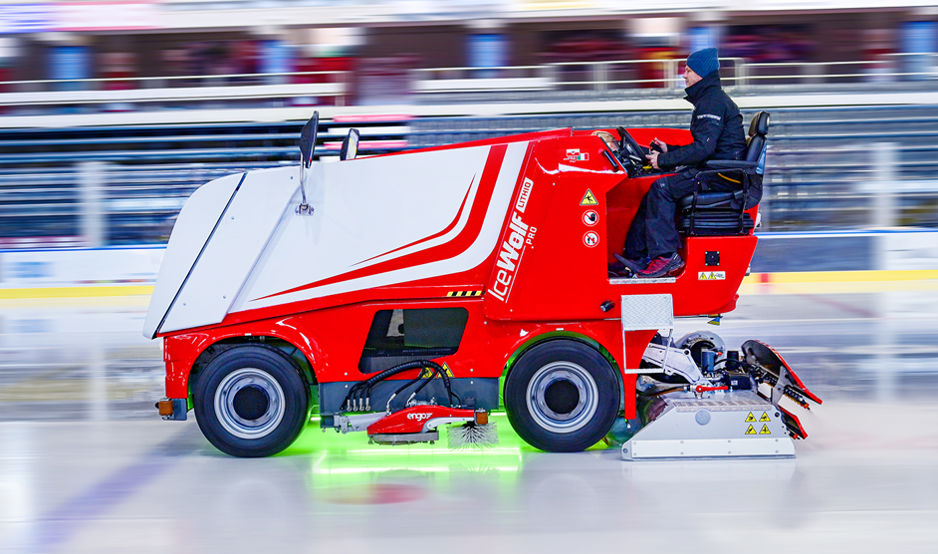
ENGO offers personalisation through RAL colours, combinations of snow-tank and body colours, branding decals and special designs. RAL is a standardised colour-reference system that helps specify the finish consistently.
For a club or arena, this can connect the machine visually with the venue. For a seasonal rink, it creates another opportunity to carry the identity of the event into the skating space.
Personalisation is separate from resurfacing performance. A colour scheme does not improve the blade, and sponsor graphics do not increase snow capacity. Assess those operating requirements first, then decide how the machine should appear to visitors.
A written design specification also helps keep venue branding clear of safety information and important service details. The machine remains working equipment even when it becomes part of the attraction.
What makes ENGO interesting for rink operators?
The interest lies in the combination: a broad electric range, lithium charging, remote monitoring, digital controls, mechanical maintenance systems and model-specific options.
That combination is more useful than claiming a single manufacturer is best for every rink. A small Christmas installation and a large professional ice facility share the need for well-maintained ice, but not necessarily the same machine.
Napapiri designs, manufactures, rents and sells real-ice rinks. From that project perspective, the resurfacer should be considered alongside the installation layout and operating plan, rather than added after the rink design is complete.
Specify the resurfacer around the rink's busiest working day, not around the longest feature list. That is the practical lesson connecting the IceFox's compact format with the IcePanther's more extensive controls.
Frequently asked questions
What size rink is the ENGO IceFox LITHIO designed for?
ENGO specifies the IceFox LITHIO for indoor and outdoor ice surfaces up to 800 m². Its suitability also depends on the resurfacing workload and site layout.
What battery does the IceFox LITHIO use?
The published IceFox LITHIO specification lists an 80 V / 200 Ah lithium battery. It also lists three asynchronous electric motors, a 1,400 mm blade and a 340-litre water tank.
What does ENGO SmartConnect show?
ENGO describes SmartConnect as providing battery charge, blade position and water-level information through a smartphone or computer. It also describes a driving log and integrated GPS location information; confirm the functions and connectivity for the chosen model.
Is the IcePanther an autonomous ice resurfacer?
The cited IcePanther information describes automatic starting of working functions, not driverless operation. Touchscreen and joystick controls remain part of the machine’s operating arrangement.
Are ice-thickness sensors standard on the IcePanther?
ENGO lists ice-thickness measurement sensors as optional equipment on the IcePanther. LED advertising displays are also optional, so both should be confirmed in the ordered configuration.
Can ENGO lithium machines charge between resurfacings?
ENGO describes intermediate charging between resurfacing operations for its lithium technology. The practical schedule depends on the approved charger, electrical supply, battery configuration and workload.
Which ENGO model is intended for the largest surfaces?
ENGO positions the IceLion for ice surfaces up to 7,000 m². The range also includes the IceTiger up to 3,000 m² and IcePanther up to 2,500 m².
Maintaining great ice is the real objective
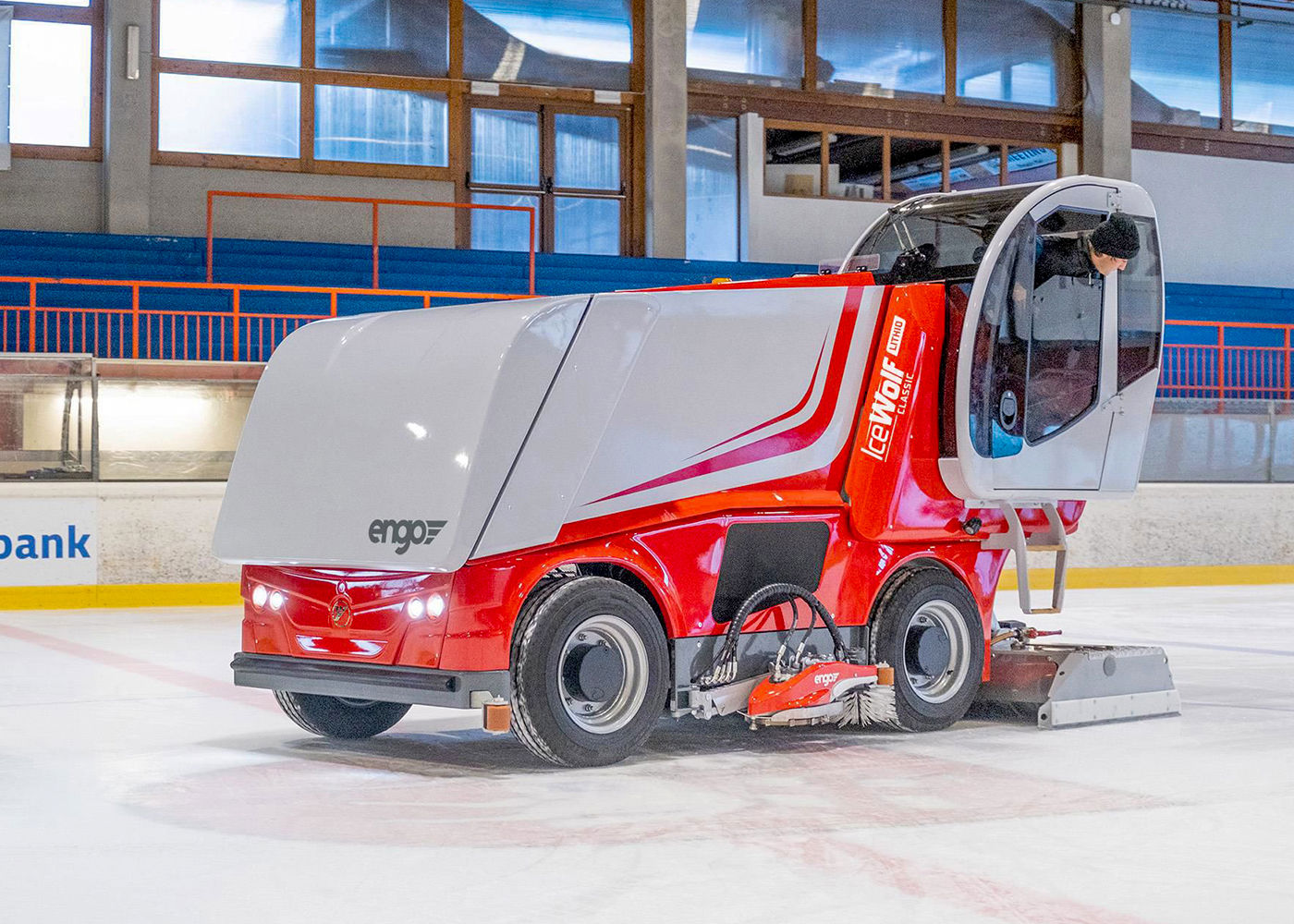
A final detail is easy to overlook: ENGO states that every completed resurfacer is tested on ice after assembly. The machine's real working environment remains the reference point, even as batteries, software and digital displays develop.
The same principle should guide your equipment choice. Ask for a demonstration that includes operation, filling, snow unloading, cleaning and charging, not just a drive around the surface.
Producing good ice is only the beginning. Maintaining it consistently is what shapes the skating experience. To plan a real-ice installation with the right space and operating arrangements, contact Napapiri with your rink dimensions, venue and proposed opening schedule.
Sources and photography
Technical information is based on ENGO's official product and technology pages, checked on 1 October 2026. Features and capacities vary by model and configuration; manufacturer specifications are not independent comparative test results.
- IceFox LITHIO technical information.
- IcePanther LITHIO equipment and options.
- IceWolf CLASSIC configurations and maintenance systems.
- IceWolf SMART controls and connectivity.
- ENGO model-range overview.
- ENGO technology, SmartConnect and lithium charging.
- ENGO personalisation gallery.
- ENGO company history.
Cover photograph: IceFox LITHIO. Source and image credit: ENGO, official product website. Individual photographer not identified on the source page.
Related guides